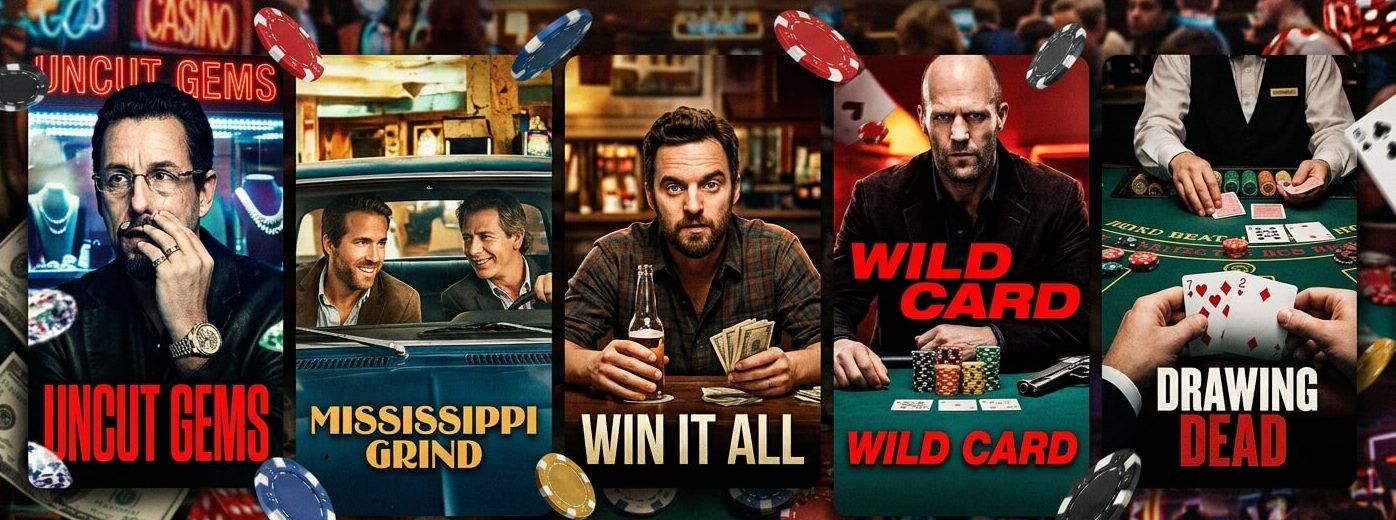
Gambling addiction is a frequent subject in movies, but it is rarely presented as a simple matter of someone enjoying a card game too much. The most revealing films show people who cannot stop chasing losses, who hide debts from their families and who believe a single win will restore everything. These five films approach the problem from different angles.
Five Films About Gambling Addiction
The selection includes Uncut Gems (2019), Mississippi Grind (2015), Win It All (2017), Wild Card (2015) and the documentary Drawing Dead: The Highs & Lows of Online Poker (2013). Together, they cover sports betting, poker, casino gambling and the destructive effects of compulsive play.
1. Uncut Gems (2019): Betting Before Family and Safety
Howard Ratner, played by Adam Sandler, runs a jewelry business in New York. He owes money to dangerous creditors yet continues making sports bets instead of reducing his debt. When he acquires a valuable black opal and meets NBA player Kevin Garnett, he sees another opportunity for a large wager.
How Addiction Is Depicted
Howard treats any available money as a potential stake. He invents explanations for his decisions, conceals information and repeatedly promises that one more win will resolve everything. He risks not only his finances but also his relationships and personal safety.
Why the Film Is So Tense
The Safdie brothers use overlapping dialogue, relentless movement and constantly escalating conflicts to convey the experience of living without any pause between crises. For Howard, excitement and terror have become part of the same routine.
2. Mississippi Grind (2015): Living for the Next Lucky Bet
Gerry, played by Ben Mendelsohn, is an experienced gambler deep in debt. He meets the outgoing Curtis, played by Ryan Reynolds, and persuades himself that their friendship might change his luck. The pair travel through the American South, gambling in casinos and trying to reach a high-stakes game in New Orleans.
Why Gerry’s Story Feels Real
Instead of a glamorous genius at the poker table, the audience sees a man whose choices are shaped by fear, hope and the need to recover previous losses. Small wins convince Gerry to keep playing, and defeats push him toward even greater risks.
Damaged Relationships
Gerry’s gambling has affected his family, finances and sense of self. Companionship may offer moments of comfort, but it cannot automatically cure his inability to stop betting.
3. Win It All (2017): When Someone Else’s Money Becomes a Temptation
Eddie Garrett, played by Jake Johnson, is asked to look after a bag of cash for an acquaintance. Although he promises not to touch it, the temptation of gambling proves too strong. After losing some of the money, he tries to win it back, creating a dangerous cycle.
Losing Control
Eddie repeatedly moves his limits. What initially seems like a small, temporary risk becomes a debt he cannot easily repay. He is not simply unlucky; his central difficulty is an inability to respect his own decisions.
The Role of Family and Support
Relationships offer Eddie alternatives to gambling, but lasting improvement depends on whether he can accept responsibility and act consistently rather than hoping for a miraculous win.
4. Wild Card (2015): Why a Big Win Is Not an Exit
Nick Wild, played by Jason Statham, earns his living as a Las Vegas bodyguard and dreams of leaving the city. He possesses the skills to survive dangerous fights, but has difficulty walking away from blackjack.
Nick’s Central Problem
Even after winning enough to make a fresh start, he is tempted to keep playing. His struggle reveals the difference between possessing money and being able to stop risking it.
Is the Addiction Realistic?
The action is exaggerated, but the emotional pattern—winning, feeling invincible, taking one more risk and then suffering the consequences—is recognizable.
5. Drawing Dead: The Highs & Lows of Online Poker (2013)
This documentary examines different experiences of online poker. It contrasts the world of players who achieve success with that of someone whose gambling has become deeply destructive.
Two Sides of the Same Activity
One person may treat poker as disciplined competition, while another loses control over time, money and expectations. The documentary format makes the consequences particularly tangible.
Michael Korpi’s Story
Korpi’s experiences show that compulsive gambling can involve mounting debt, isolation and significant harm to everyday life. The film is valuable precisely because it gives personal consequences as much attention as the game itself.
Five Signs of Gambling Addiction Commonly Shown in Films
1. Chasing Losses
A person keeps betting in order to recover money already lost. That leads to larger risks at exactly the time when the financial position is getting worse.
2. Inability to Stop After Winning
A successful bet does not produce satisfaction. Instead, it becomes evidence that another—and perhaps larger—win is available.
3. Money Loses Its Everyday Meaning
Rent, bills, savings and borrowed funds can begin to look like nothing more than possible gambling stakes.
4. Lying Becomes Routine
People may hide transactions, make excuses and conceal losses from those close to them, damaging trust even when the full extent of the debt remains unknown.
5. Gambling Replaces Former Interests
Hobbies, family, work and friendships become secondary to planning bets, gambling and thinking about the next opportunity.
Gambling Addiction Versus Ordinary Recreation
Recreational gambling is usually limited by time, money and the person’s willingness to walk away. Problem gambling involves persistent loss of control, continuing despite negative consequences and repeated attempts to win back losses. The amount wagered alone is not enough to define the problem.
Possible Consequences
The films illustrate debt, relationship breakdown, isolation, lying, anxiety, dangerous borrowing and personal conflict. Dramatic movies often portray extreme cases, but the underlying patterns do not require spectacular sums of money.
Which Film Is Most Realistic?
Mississippi Grind is particularly convincing about daily dependence and chasing losses. Uncut Gems dramatizes the emotional intensity of the problem, while Win It All shows a more everyday cycle of temptation and self-deception. Drawing Dead offers documentary perspectives.
Why These Stories Rarely End Simply
A single big win is not necessarily a happy ending, because the underlying behavior can remain unchanged. In many gambling films, the real challenge is not acquiring money but regaining control and rebuilding trust.
Where to Seek Help
If gambling is causing financial or personal harm, a person can contact a qualified mental-health professional, an addiction counselor or a local problem-gambling support service. Freezing gambling accounts, limiting access to money and discussing the situation with trusted people may also help. Emergency or crisis services are appropriate when there is an immediate danger to someone’s safety.
Which Movie Should You Choose?
For a stressful thriller, choose Uncut Gems. For a grounded character study, choose Mississippi Grind. For a quieter story about resisting temptation, try Win It All. For action, watch Wild Card. For real-life testimony, start with Drawing Dead.
Frequently Asked Questions
Which Films Best Explore Gambling Addiction?
Uncut Gems, Mississippi Grind, Win It All, Wild Card and Drawing Dead approach it from complementary perspectives.
Are There Films About Poker Addiction?
Yes. Mississippi Grind, Win It All and Drawing Dead contain important material about gambling problems connected to card games.
Why Do Problem Gamblers Chase Losses?
They may believe recovering money will erase the consequences of earlier mistakes, even though further betting can make the situation worse.
Conclusion
These movies share an uncomfortable insight: when gambling becomes an addiction, the player’s greatest opponent is often the belief that the next win will make everything right.